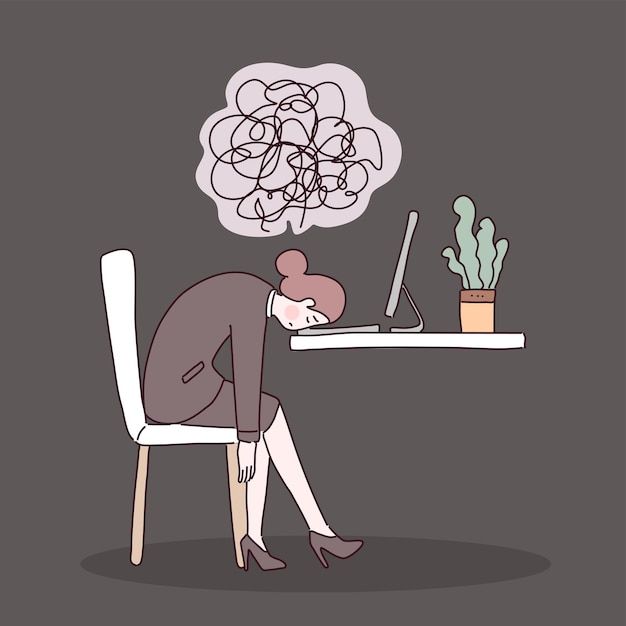

Why Your Brain Won’t Stop Overthinking
Have you ever laid in bed at 2:00 AM, replaying a conversation you had three years ago? Or maybe you’ve spent an hour drafting a simple text message because you’re afraid of sounding “weird.”

If that sounds like you, welcome to the club. Overthinking is something almost everyone deals with, but understanding the “why” behind it is the first step to finally getting some peace of mind. Here is a complete look at why our minds get stuck in these loops.
1. Your Brain is a “Safety First” Machine
Deep down, your brain is like a prehistoric bodyguard. Back in the day, humans had to look for every possible danger to stay alive. Today, we don’t have sabertooth tigers, so our brains look for “social dangers” instead. Your mind thinks that if it imagines every bad scenario, it can keep you safe from being embarrassed or rejected.

2. The Illusion of Control
We overthink because we hate uncertainty. We feel like if we think about a problem long enough, we will eventually find the “perfect” answer that guarantees everything will work out. In reality, most things in life don’t have a perfect answer, and the extra thinking just makes us more tired.

3. High Standards and Perfectionism
If you feel like you always have to be the best, you’re more likely to overthink. You might analyze every small mistake because you’re afraid of not being “perfect.” This creates a cycle where you are constantly grading your own performance instead of just living your life.
4. The “Comparison Trap”
We spend hours every day looking at the “highlight reels” of other people’s lives on social media. When you see someone else looking happy or successful, your brain starts a silent competition. You might start overthinking your own life, wondering, “Why don’t I look like that?” or “Am I falling behind?”

5. Physical Stress and Choice Overload
Sometimes, overthinking is a physical reaction. If you haven’t slept well or you’ve had too much caffeine, your brain loses its “filter.” Additionally, we have too many choices today from what to wear to what career to pick. This Choice Overload makes our brains freeze up as we try to weigh every single option.

How to Give Your Brain a Break
You can’t just “turn off” your brain, but you can change how you handle the noise with these simple steps:
The “So What?” Method: Ask yourself, “In five years, will this actually matter?” Usually, the answer is no.
The 5-Minute Rule: Give yourself five minutes to worry as hard as you want. When the timer goes off, you move on.
Write It Down: Getting thoughts out of your head and onto paper makes them feel smaller and more manageable.
Tools to Help You Reset
If you want to dive deeper or need a little extra help to quiet the mental chatter, these resources are excellent starting points:
| Resource | Benefit |
| Headspace | Teaches you how to breathe and meditate to stay in the moment. |
| Audible | Great for listening to self-help books like Stop Overthinking while you walk. |
| Talkspace | Connects you with a licensed therapist to help you find your specific triggers. |
| Calm | Uses “Sleep Stories” to help your brain drift off without the “2:00 AM spiral.” |
The Bottom Line
Overthinking doesn’t mean something is wrong with you, it just means your brain is working overtime to try and help you. It’s a mix of your biology, your habits, and the fast-paced world we live in. By noticing the pattern and using a few tools, you can start living more in the moment and less in your head.